
Home · Our cinnamon
Our cinnamon
This is cinnamon in its truest form.
The Auburn begins with Ceylon Cinnamon grown on our fourth-generation family estate in southern Sri Lanka: hand-peeled, hand-rolled, sun-dried and hand-packed in Melbourne 7–10 days later.
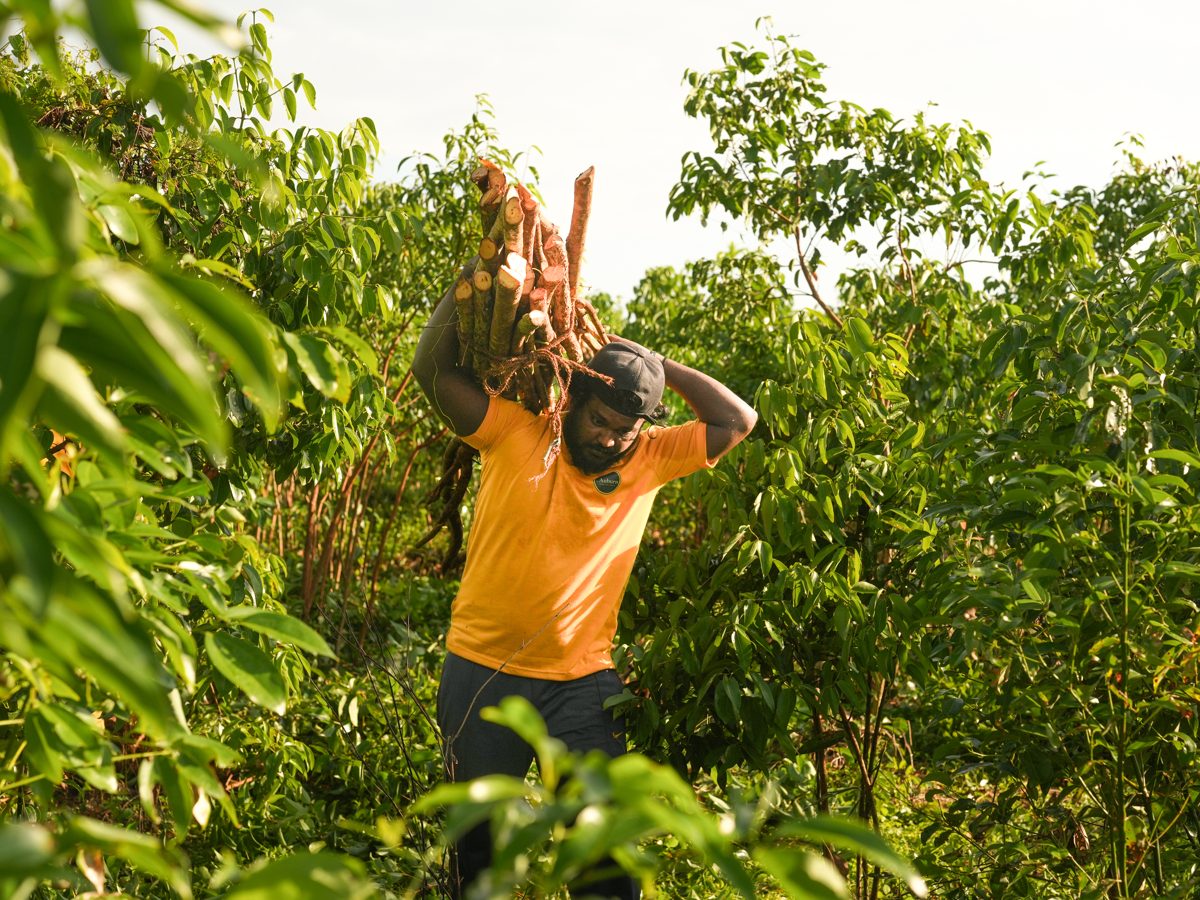
From tree to cup
Six steps, all by hand.
Every step happens the way it has on our estate for four generations, without aggressive machine processing.
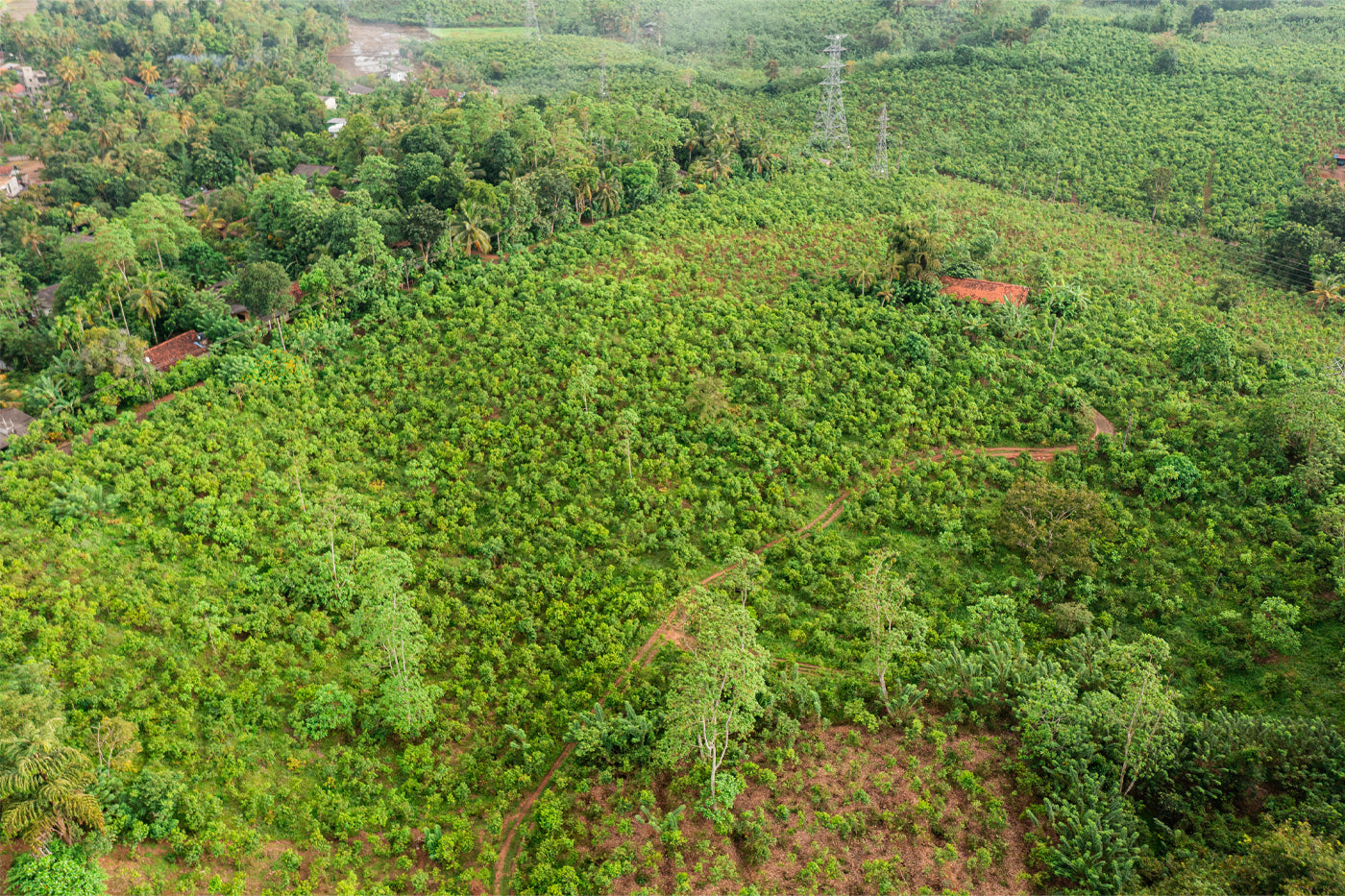
Grown in Sri Lanka
Our cinnamon grows on a 101-year family plantation in southern Sri Lanka.
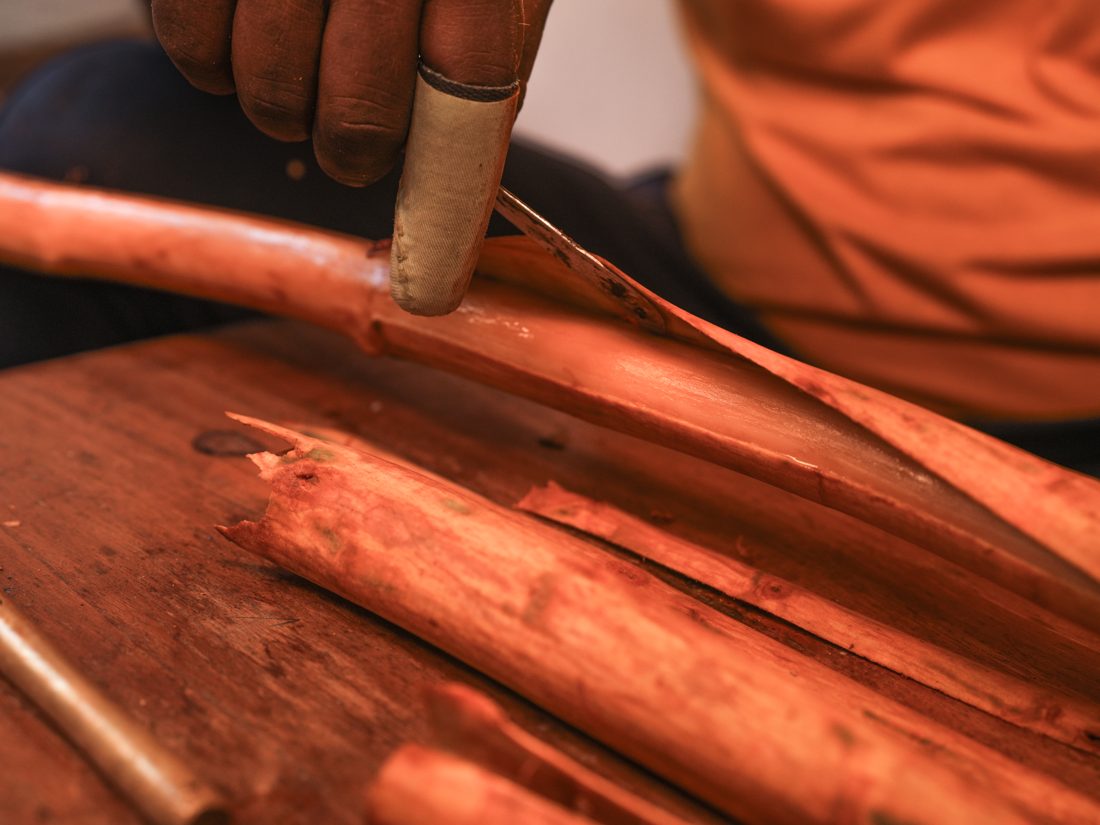
Hand-peeled
Skilled peelers lift the delicate inner bark by hand, not by machine.
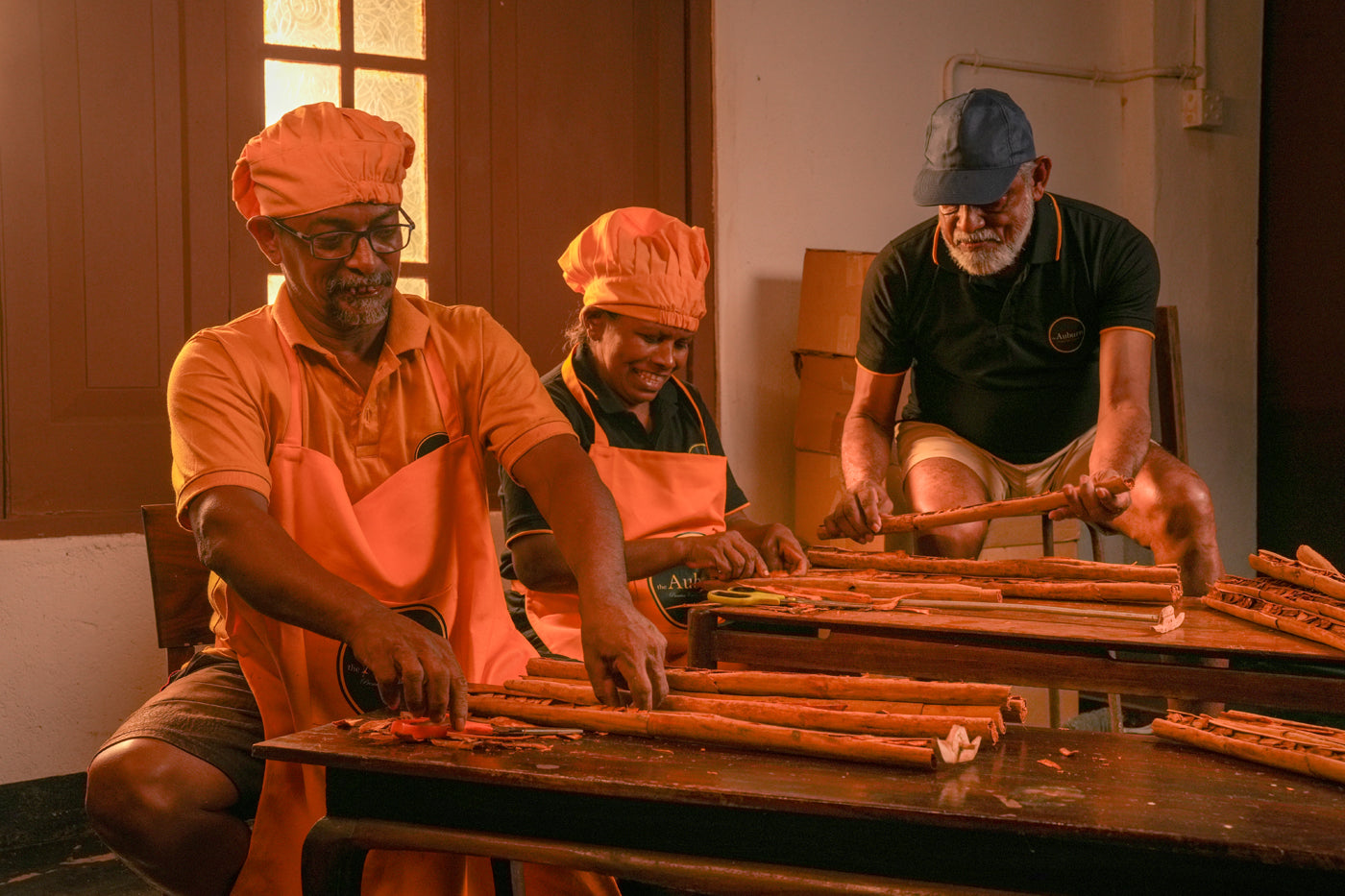
Rolled by hand
Fine layers of bark are rolled into the characteristic Ceylon Cinnamon quill.
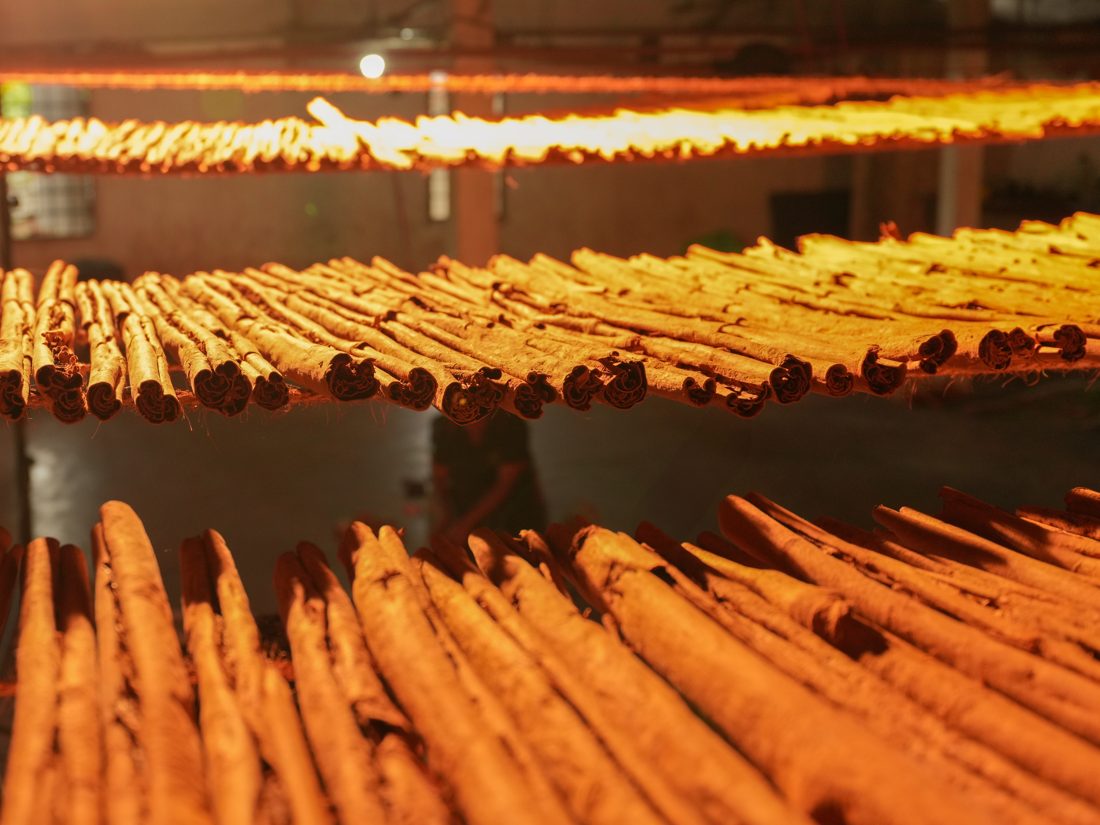
Sun-dried & graded
Quills are naturally dried, never fumigated with sulphur, then selected by grade. Alba goes into our premium lines.
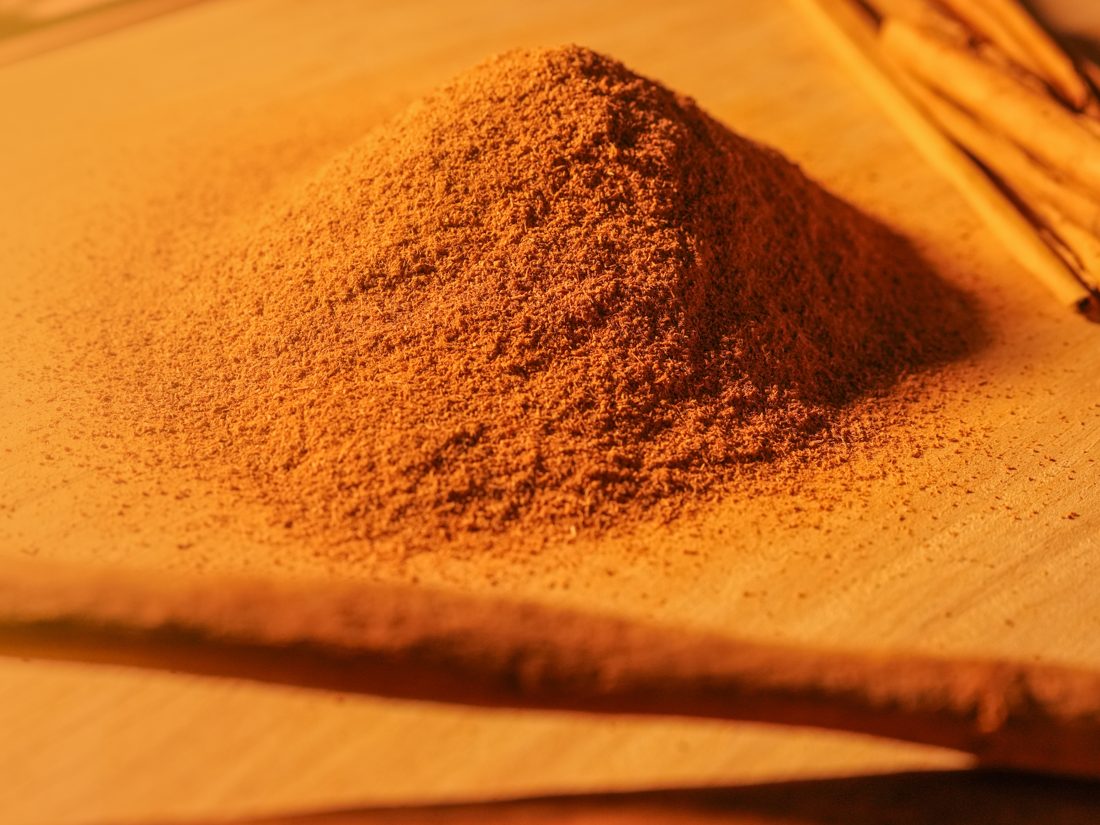
Prepared for each product
Kept as whole quills, cut into flakes for brewing, or ground without heat for the pantry.
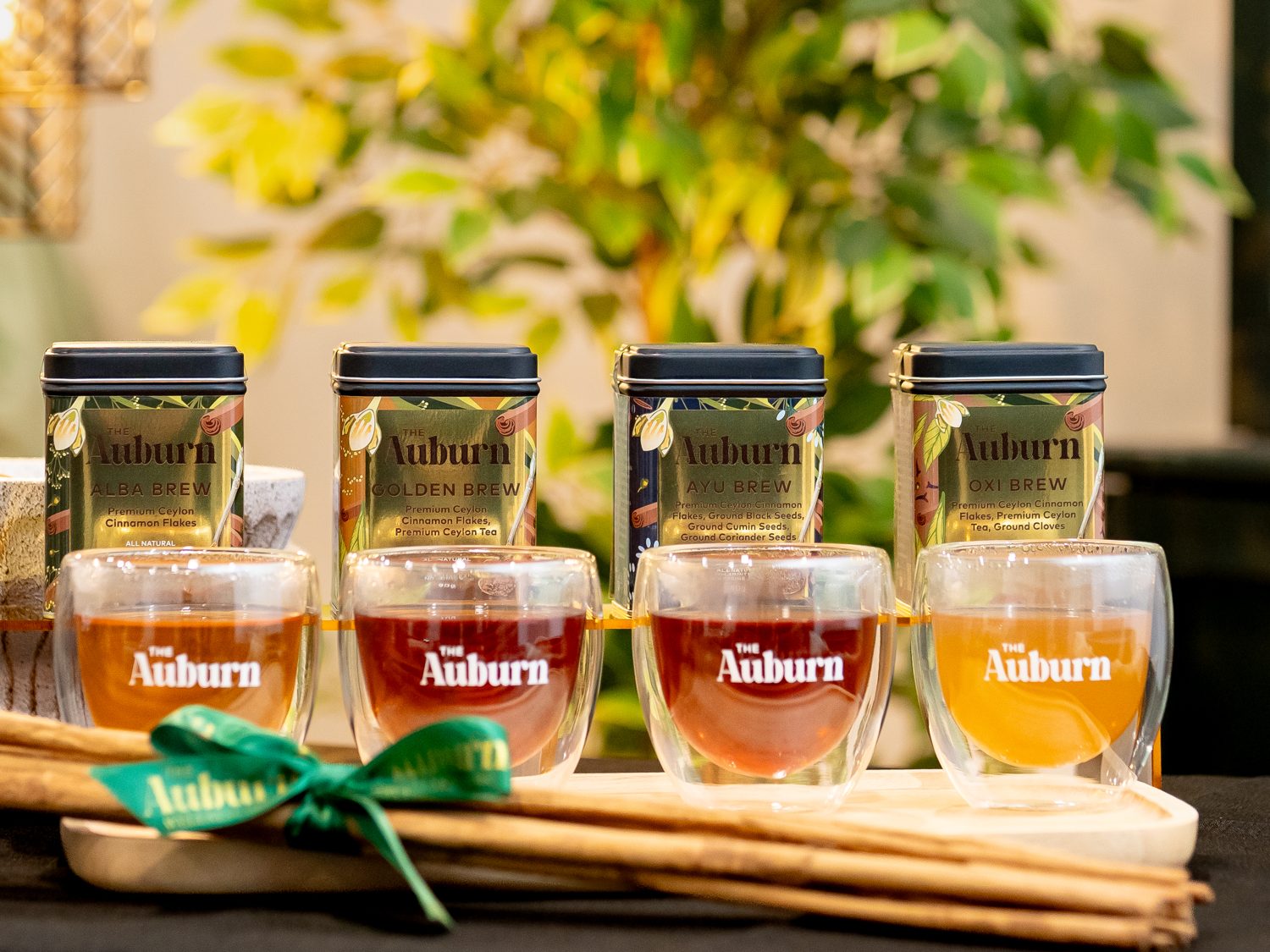
Hand-packed in Melbourne
Airfreighted to Melbourne and hand-packed into glass jars and tins, 7–10 days from farm to shelf.
History of True Cinnamon
Once worth more than gold.
Ceylon Cinnamon, often called True Cinnamon, is native to Sri Lanka and has been traded and treasured for over 2,000 years.
- 2,000+ years ago
The world's finest source
Traders from Arabia, China and Europe prized Sri Lanka as the only natural source of the world's finest cinnamon.
- Early 1500s
The Portuguese arrive
Controlling the coast, they tried to dominate the global cinnamon trade.
- 1658
The Dutch monopoly
The Dutch East India Company took control of production, pricing and export to Europe.
- 1796
The British and cassia
The British promoted cassia, a cheaper, harsher substitute, to weaken the monopoly. Most "cinnamon" sold today is still cassia.
- Today
Protected origin
Ceylon Cinnamon holds Protected Geographical Indication status in the EU: genuine Ceylon Cinnamon comes only from Sri Lanka.
Ceylon vs cassia
Not all cinnamon is the same.
| Ceylon Cinnamon | Cassia | |
|---|---|---|
| Plant | Cinnamomum verum (C. zeylanicum), native to Sri Lanka | A related but different cinnamon bark |
| Flavour | Sweeter, finer and more delicate | Generally stronger and harsher |
| Structure | Many thin layers rolled together | Typically one thick curl of bark |
| Coumarin | Naturally lower in coumarin | Typically contains considerably more coumarin |
| Colour | Light, golden tan | Darker reddish-brown |
Alba grade
The finest grade of Ceylon Cinnamon.
Ceylon Cinnamon is graded by quill diameter. Alba is the thinnest, lightest and most refined, and the rarest and most valuable grade.
- Alba The finest grade, about pencil-thin. Used in our brews and premium lines.
- Continental C5 Special, C5 and C4, each slightly thicker.
- Mexican & Hamburg Thicker, coarser grades.
- Quillings Broken pieces from baling, sorted by size.
Our commitment
Fresh, pure and traceable.
Single origin
One family plantation in southern Sri Lanka. Fully traceable, never blended.
Naturally dried
Sun-dried and never fumigated with sulphur or treated with additives.
Ground without heat
Our powder is ground without heat to protect its natural oils and aroma.
7–10 days
From our farm to a sealed jar or tin in Melbourne in 7–10 days.
Interested in the research on Ceylon Cinnamon? Browse research articles
Experience The Auburn
From quill to cup.
Explore how one carefully sourced ingredient becomes brews, pantry essentials, whole quills and gifts.

Acknowledgement of Country
The Auburn respectfully acknowledges the Traditional Custodians of the land on which we live, work and gather, the Wurundjeri Woi-wurrung People of the Kulin Nation, and pays respect to their Elders past and present.